How to Choose the Best TMS for Your Business

The world of USPS mail contracting is currently witnessing the emergence of a new chapter in the industry — one that significantly changes how business is conducted, and it’s called CLEAR. Six simple letters representing important and pivotal qualities like Compliance, Leadership, Efficiency, Accountability, and Responsibility— CLEAR was introduced with good intentions. Seriously, for an industry that has long been criticized, this acronym sounds quite promising, doesn’t it? Well, now, upon reflection, it’s evident that while it was rolled out with high expectations, it hasn’t been entirely smooth.

While the story of CLEAR is still being written, compliance isn’t optional— it’s mandatory. At the same time, for contractors to navigate the new regulatory complexity and close the skill gaps, a Transportation Management System (TMS) is no longer just a luxury; it’s a necessity. Whether managing a small fleet or overseeing a complex supply chain, the right TMS must be capable of streamlining daily operations, reducing labor time and costs, improving tracking quality, and aligning perfectly with USPS compliance regulations. So, how do you choose the best TMS for your business, ensuring you won’t regret the time and money spent later? Let’s dive in.

1. Automation of Workflows: Work Smarter, Not Harder

In the world of logistics, where every second counts and deadlines are relentless, it’s crucial to have a TMS that automates routine tasks, making time for your team to focus on strategic decisions. Planning, dispatching, and the ability to quickly and proactively respond to service changes should all be built into the system, driving efficiency through customizable, automated workflows that reduce manual errors, streamline operations.

The right question to ask: Does this TMS eliminate bottlenecks and grow with my business? A system with strong automation isn’t just a convenience— it’s a game-changer for scalability and long-term success.

2. Customer Success: Support When You Need It Most
4. Easy-to-Use Reporting Features

Maintaining financial accuracy and operational efficiency is yet another cornerstone of any successful business. Streamlining the payment reconciliation process helps eliminate the complexity often associated with managing payments. A well-designed TMS with intuitive reporting features provides valuable insights, enabling informed decision-making, trend analysis, and performance optimization. By transforming raw data into actionable insights, it supports a more efficient transportation strategy and strengthens overall financial performance.

Does your TMS have reports? How insightful are these reports, and what value will they bring to your business? Will they help you make difficult decisions quickly and effortlessly?

Planning, dispatching, and the ability to quickly and      proactively respond to service changes should all be built      into the system, driving efficiency through customizable, automated workflows that reduce manual errors, streamline operations.

5. Pricing That Delivers Value

Cost is always a factor, but the cheapest option isn’t always the best. A great TMS delivers a strong return on investment (ROI) by reducing freight spend, improving operational efficiency, automating repetitive tasks, etc. When assessing pricing, consider the total value—not just the sticker price.

Does the TMS offer tiered plans to match your business size? Are there hidden fees for implementation or support? Look for transparent pricing that aligns with your goals, ensuring you get a solution that’s worth every penny.

Technology is only as powerful as the team backing it. The best TMS providers go beyond just selling software— they offer dedicated support, hands-on onboarding, and continuous training to ensure your success. Whether you’re resolving a technical challenge or fine-tuning your system for peak season, you need a true partner, not a vendor who vanishes after the sale is complete.

Before choosing a TMS, ask yourself: Does the provider offer 24/7 support? Will you have a dedicated account manager?

3. Integrations: Seamless Data Exchange through EDI

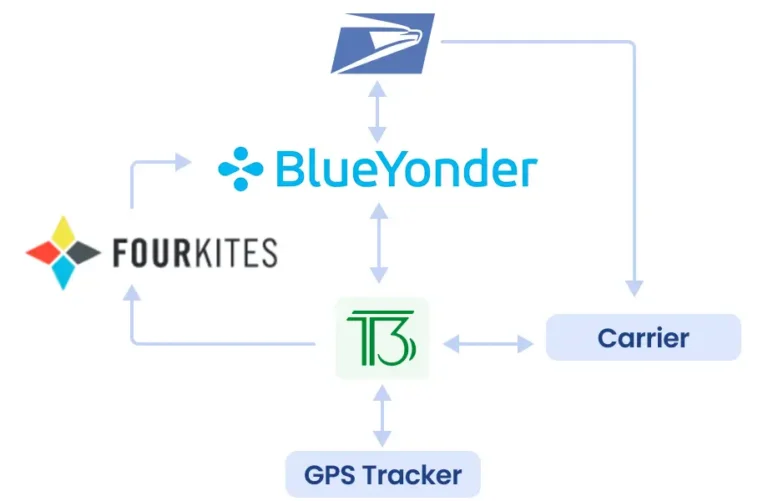
In logistics, connectivity is king and no TMS can operate in a vacuum. A TMS should integrate effortlessly with key players like a GPS tracker, USPS Logistics Gateway (ILE) for USPS compliance and FourKites for real-time tracking and visibility. These integrations ensure seamless data transfer, providing information on your trips, geolocations, and arrival/departure  times (ATA/ATD), ensuring end-to-end transparency and data consistency. In simple terms, Carriers get paid once Proof of Delivery is made available. Once these integrations are in place, USPS will be notified of completed trips, and only then you’ll get paid.

When evaluating a TMS, confirm its compatibility with your GPS tracker, and interoperability with EDI and FourKites for running your CLEAR contracts. Seamless communication between your TMS and these tools is an essential part of ensuring compliance with USPS‘s CLEAR regulation.

Making the Right Choice

To summarize, a TMS isn’t just software—it’s a strategic partner. Selecting the right TMS is a critical decision for any business aiming to navigate the complexities of modern logistics, especially in light of evolving regulations like CLEAR and an industry that constantly reshapes and redefines itself. By focusing on automation, customer support, seamless integrations, robust reporting, and pricing transparency, USPS contractors can ensure they invest in a solution that not only meets compliance requirements but also drives long-term success and efficiency.

At T3, we understand the importance of a well-rounded TMS and are dedicated to providing a solution that helps your business thrive. Reach out today and discover how we can partner with you for a more streamlined, cost-effective, and successful future in transportation management. 


Social Media :